Meyvn World

Brand Positioning & Market Clarity

Many businesses struggle with inconsistent messaging, weak differentiation, and inefficient marketing because positioning decisions were never clearly defined.

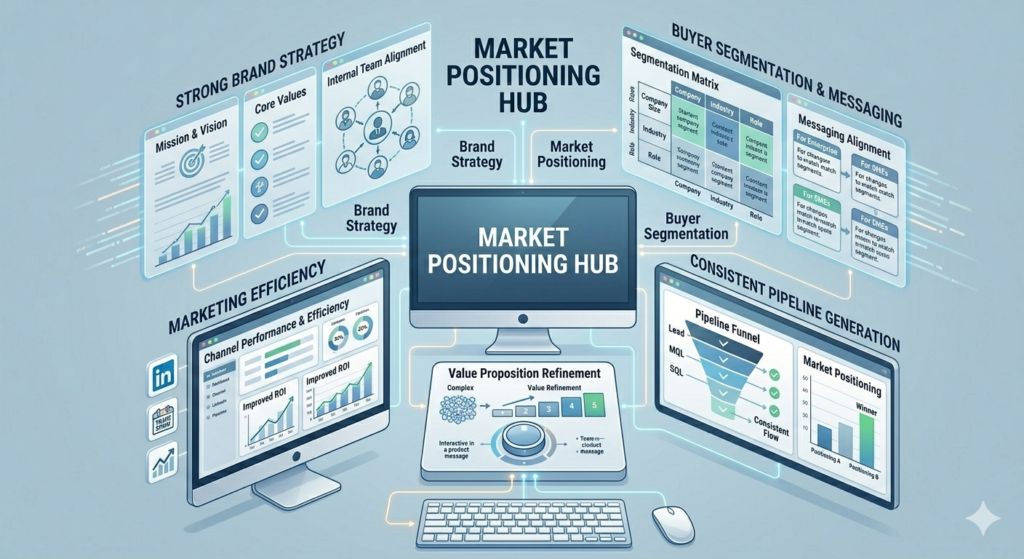
Meyvn World helps organizations build positioning frameworks that improve market clarity, strengthen value communication, and support more consistent demand generation.

Brand Clarity and Market Positioning

Weak positioning creates fragmented marketing execution

Positioning problems often appear later as campaign inefficiency, inconsistent messaging, weak lead quality, or unclear value communication.

Positioning challenges often emerge across:

  • digital channels
  • sales conversations
  • website ecosystems
  • social platforms
  • search visibility
  • paid acquisition
  • audience segmentation
  • customer experience pathways
  • content systems
  • demand generation environments

Without strategic coordination, businesses often create inconsistent messaging, diluted positioning, and weak market differentiation.

What positioning systems include

 
Strategic Positioning
  • positioning strategy
  • competitive differentiation
  • buyer segmentation
  • value proposition refinement
Messaging Infrastructure
  • messaging architecture
  • narrative development
  • website messaging
  • campaign consistency
Market Visibility
  • authority positioning
  • trust-building frameworks
  • long-term visibility strategy

Effective positioning improves internal clarity while strengthening how the business is understood externally.

Positioning goes beyond visual branding


Traditional Branding FocusPositioning Framework Focus
Visual identityMarket differentiation
Design consistencyBuyer understanding
Campaign messagingCommercial relevance
Brand awarenessConversion clarity

Strong positioning improves commercial clarity

Effective positioning helps businesses:

  • communicate value more clearly
  • reduce audience confusion
  • strengthen market differentiation
  • align internal messaging
  • improve acquisition efficiency
  • support long sales cycles
  • improve conversion consistency
  • create stronger strategic direction

Strong positioning improves consistency across marketing, sales conversations, and customer acquisition efforts.

Clear messaging improves buyer confidence

Positioning performance improves when businesses align:

  • audience pain points
  • buyer expectations
  • industry language
  • trust signals
  • customer intent
  • value communication
  • content ecosystems
  • search visibility
  • campaign messaging
  • conversion pathways

Clear messaging systems improve both visibility and audience confidence.

Positioning should support broader commercial strategy

Positioning should not operate independently from demand generation, sales systems, customer experience, or growth planning.

Effective positioning frameworks are usually connected with:

  • lead generation systems
  • CRM workflows
  • website ecosystems
  • SEO structures
  • paid media systems
  • content ecosystems
  • sales qualification processes
  • lifecycle nurturing
  • market expansion initiatives
  • authority-building strategies

This creates stronger business consistency and more sustainable long-term growth.

Unclear positioning weakens conversion efficiency

The challenge is rarely visibility alone.

The issue is often:

  • inconsistent messaging
  • unclear differentiation
  • weak value communication
  • audience disconnect
  • fragmented acquisition journeys
  • poor conversion alignment
  • low trust development
  • inconsistent brand perception

Clear positioning improves consistency across the broader growth environment.

Positioning should evolve with market feedback

Positioning should evolve based on:

  • audience behavior
  • search intent patterns
  • campaign performance
  • sales feedback
  • customer interaction trends
  • engagement quality
  • conversion behavior
  • market shifts
  • competitor movement
  • demand generation insights

Refinement systems help businesses maintain strategic relevance while improving acquisition quality over time.

Process of developing brand strategy
Typically relevant for
  • B2B organizations
  • industrial businesses
  • educational institutions
  • healthcare organizations
  • technology firms
  • consulting businesses
  • regional businesses
  • service-based companies
  • businesses with complex sales cycles
  • organizations undergoing repositioning
  • companies entering new markets
Scroll to Top